
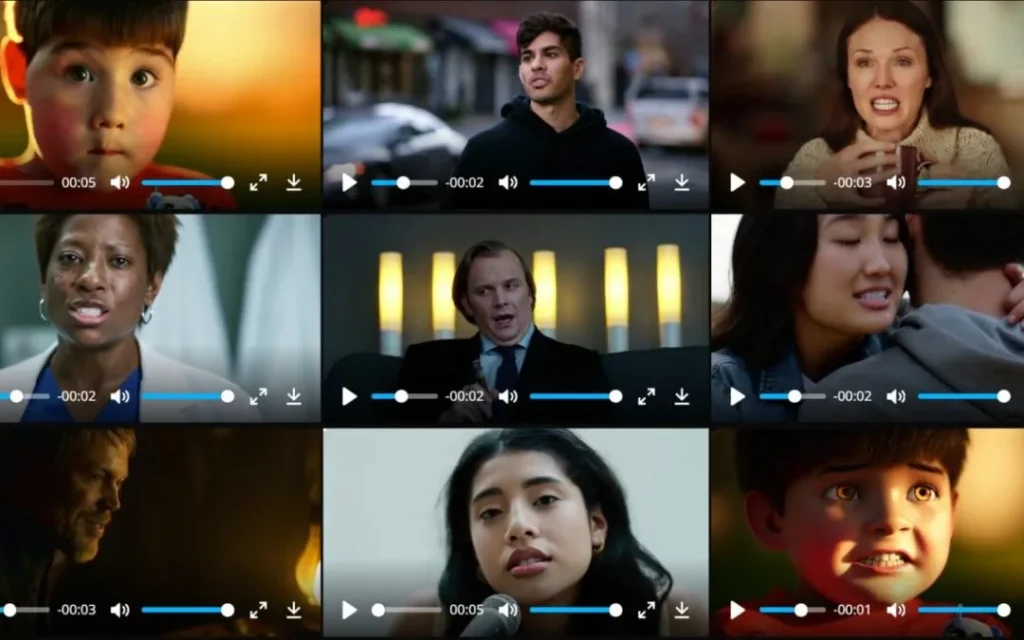
Full-Body Animation, Not Just Faces
AI video animation just turned a corner. Meta, working with University of Waterloo researchers, has introduced MoCha—an AI model that generates complete character animations. Not just faces or lip-sync, but hands, shoulders, and nuanced upper-body motion, even in complex multi-character scenes. In demo reels, MoCha shines through detailed facial expressions and subtle body language, rendered in HD close-ups. It’s a noticeable leap in realism compared to what generative video usually offers.
30 Billion Parameters Driving the Engine
At MoCha’s core is a diffusion transformer model with 30 billion parameters. This setup enables it to generate five-second video clips at 24 frames per second—aligned with top-tier AI video standards. The model reads both audio and text to drive animations. It syncs what characters say with how they move, ensuring gestures and speech match naturally.

Tackling Lip-Sync with Precision
One of MoCha’s smarter tricks lies in its approach to lip-sync. Typical models stumble when syncing lips to speech, especially under compression. MoCha uses something called “Speech-Video Window Attention” to avoid these mismatches. This method narrows the focus: each video frame reacts to only a short stretch of audio. It’s how people speak—lips respond to the immediate sound while the body gestures to the broader message. MoCha inserts extra context tokens before and after each clip to smooth transitions. The training process pulled from 300 hours of selected video. The sources aren’t public, but they included both spoken and written inputs. This let MoCha learn the physical rhythm of dialogue and the expressive range of text-driven motion.
Simplifying Scenes with Multiple Characters
Managing more than one character in a scene usually complicates things. MoCha makes it easier with a simple naming convention. You define each character once, then reference them as Person1, Person2, and so on. That makes scripting interactions faster—handy for creating storyboards, virtual meetings, or animated explainers. When tested across 150 varied scenarios, MoCha consistently produced smooth interactions and lip-sync accuracy. Reviewers noted that movements felt believable—less robotic and more human.
MoCha in the Broader AI Animation Race
MoCha arrives as part of a bigger wave. Meta has also been developing MovieGen, another project focused on generative video. Meanwhile, ByteDance is pushing forward with its own suite, including INFP, Goku, and OmniHuman-1. It’s unclear if MoCha will be open-sourced, but it already signals where animation tools are heading. Instead of requiring large studios or hours of frame-by-frame work, tools like this make it possible for smaller teams to produce polished animated content—across entertainment, education, marketing, or digital storytelling. Whether you’re building an explainer video, a short film, or a virtual assistant with personality, MoCha suggests a future where believable animated characters don’t require full production pipelines.