
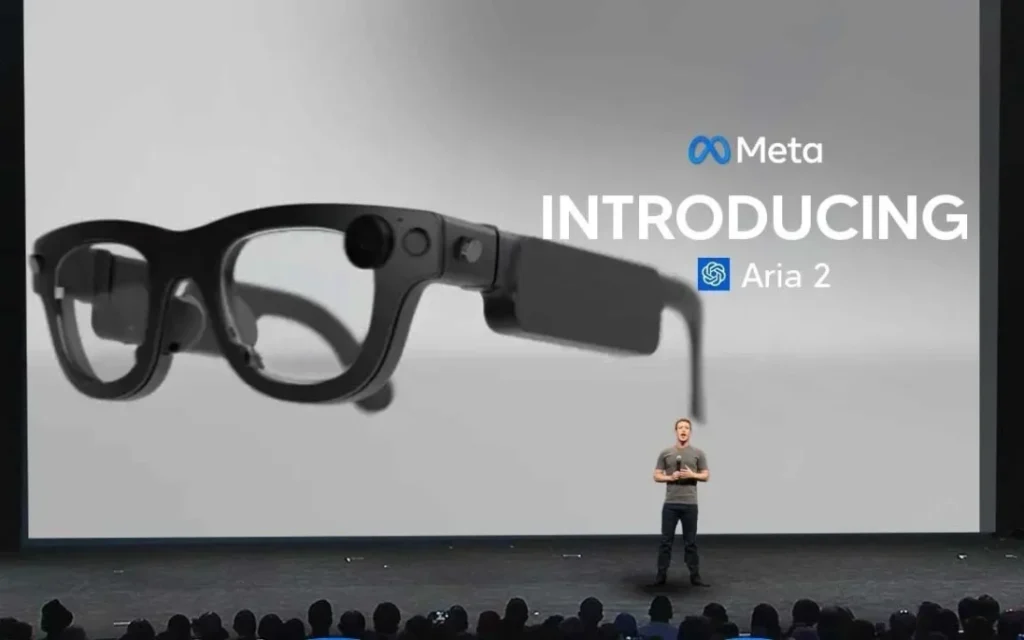
Meta’s latest research-focused AR glasses push the boundaries of AI-driven spatial computing, real-time assistance, and accessibility innovation.
Meta’s Next Leap in AI and Augmented Reality
Meta has introduced Aria Gen 2, a significant upgrade to its AI-powered augmented reality (AR) research tools. Unlike the consumer-focused Ray-Ban Meta Smart Glasses, this model is built for advancing AI, robotics, and spatial computing research. Designed for on-device AI processing and enhanced environmental awareness, Aria Gen 2 represents a step toward intelligent, context-aware AR systems that could shape future digital interactions.
Smarter, More Capable Research Glasses
Expanding on the Project Aria foundation from 2020, Aria Gen 2 refines its hardware and AI-driven capabilities to explore next-gen AR-powered assistance. While the glasses may appear sleek and unassuming, their advanced sensors and computing capabilities unlock powerful new applications.
Key Upgrades in Aria Gen 2
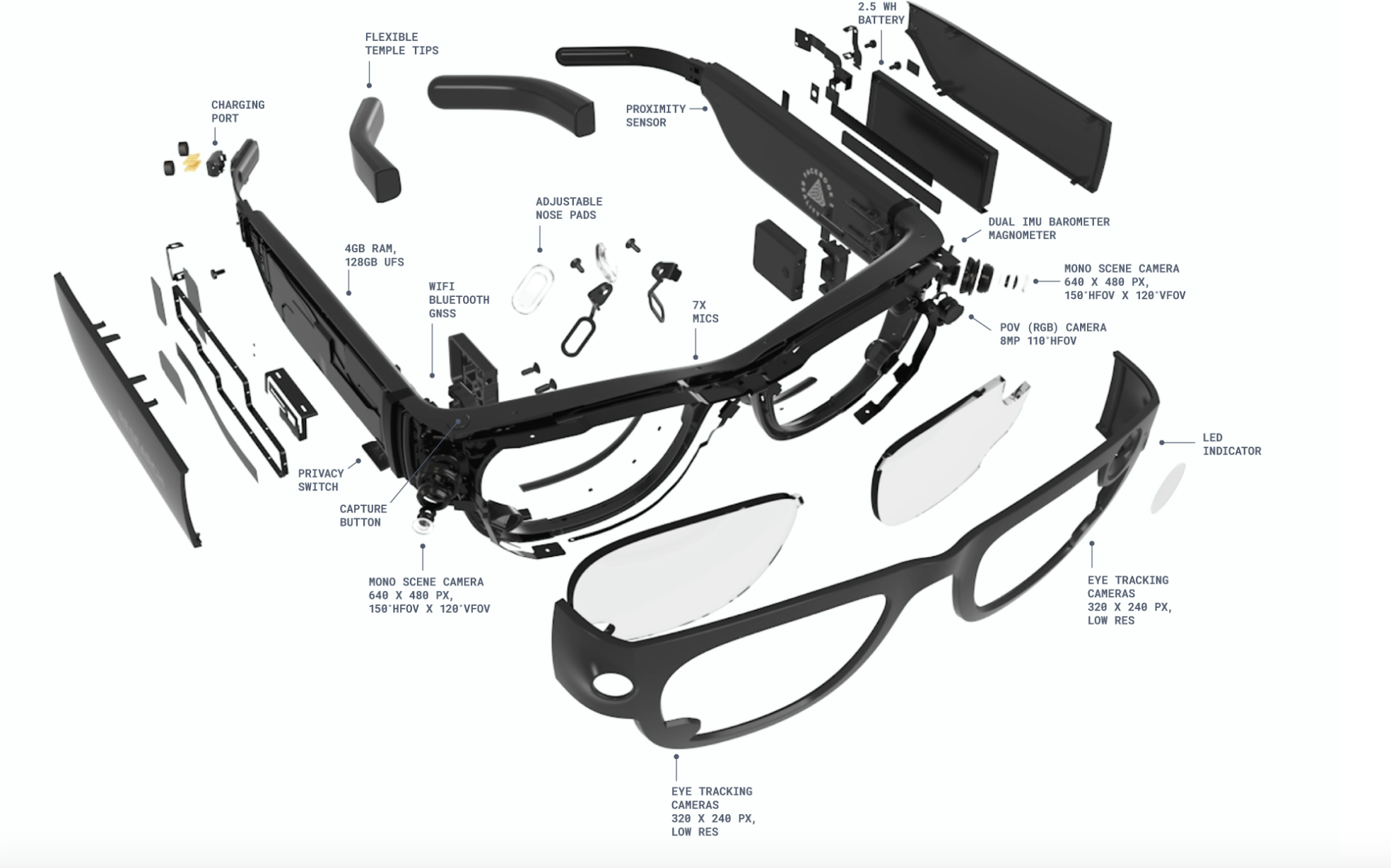
- Enhanced Camera System – A high-resolution RGB camera and SLAM (Simultaneous Localization and Mapping) system improve real-time spatial awareness, object recognition, and AR responsiveness.
- Eye-Tracking Technology – Allows AI to understand where users are looking, improving contextual responses and interactions.
- Spatial Audio and Noise Filtering – A contact microphone integrated into the nosepad improves voice recognition and accessibility for hearing-impaired users.
- Heart Rate Monitoring – A PPG (Photoplethysmography) sensor tracks heart rate, making it a valuable tool for health and wellness research.
- Portable, Long-Lasting Design – Weighing just 75 grams, the glasses offer 6–8 hours of battery life, making them ideal for extended research sessions.
On-Device AI Processing: Faster, More Private AR
One of the standout features of Aria Gen 2 is its on-device AI processing, reducing reliance on cloud computing. This results in faster response times, lower latency, and improved privacy for users handling sensitive data.
Benefits of Local AI Processing
- Real-Time Spatial Awareness – With advanced SLAM capabilities, the glasses process surroundings instantly, eliminating lag from cloud-based AR experiences.
- Instant Speech and Gesture Recognition – Faster AI-driven responses improve usability for accessibility applications and intuitive AR interactions.
- Improved Privacy – Personal data stays on the device, reducing exposure to cloud-based security risks.
By embedding AI into the device itself, Aria Gen 2 paves the way for smarter, more autonomous AR wearables that operate without constant cloud dependency.
A Foundation for AI-Powered AR Experiences
While Aria Gen 2 isn’t meant for everyday consumers, its technology is laying the groundwork for future AI-driven AR systems that could blend seamlessly into daily life. Meta’s vision extends beyond research labs into fields where real-time AI assistance can enhance interactions, navigation, and productivity.
Potential Applications of Aria Gen 2 Technology
- Advanced Spatial Mapping – AI-assisted robotics and AR navigation could revolutionize logistics, urban planning, and personal navigation tools.
- Enhanced Human-Computer Interaction – Eye tracking, gesture recognition, and multimodal AI will create more intuitive digital interfaces.
- Seamless AI Integration – Combining visual, auditory, and biometric inputs, future AR systems will adapt to users in real-time, making interactions feel natural and responsive.
By improving AI-powered perception, Aria Gen 2 is setting the stage for context-aware AR wearables that will reshape how people engage with digital content in physical environments.
AI-Powered Accessibility: A New Era for Assistive Tech
One of the most exciting prospects for Aria Gen 2 is its role in assistive technology. The glasses could enhance accessibility tools for individuals with visual, auditory, or cognitive impairments.
Helping the Visually Impaired
In collaboration with accessibility-focused companies like Envision, Meta is exploring ways to use Aria Gen 2 for:
- AI-Powered Object and Text Recognition – The glasses could identify objects and read text aloud in real-time.
- Navigation Assistance – AI-driven guidance could help visually impaired users navigate spaces with greater independence.
- Contextual Feedback – Real-time recognition of signs, labels, and even facial expressions could improve situational awareness.
Improving Audio Accessibility
For deaf and hard-of-hearing users, Aria Gen 2 offers several potential innovations:
- AI-Enhanced Speech-to-Text – Real-time transcriptions enable visual conversation assistance.
- Noise Filtering & Voice Amplification – The built-in contact microphone improves communication in noisy settings.
- Smart AI Interactions – By integrating gesture tracking and voice recognition, the glasses could refine non-verbal communication tools.
By processing AI on-device, these assistive features operate with lower latency than cloud-reliant alternatives, improving real-world usability.
What Aria Gen 2 Signals for the Future of AR
Though Aria Gen 2 is still a research tool, its advancements signal a shift toward more intelligent, responsive, and accessible AR wearables.
What This Means for AR Development
- AR is Becoming More Context-Aware – AI can now interpret environments, user intent, and sensory data with greater accuracy.
- Next-Gen Smart Glasses Are on the Horizon – Future Meta wearables could incorporate eye tracking, SLAM, and multimodal AI for everyday use.
- Accessibility Is a Core Focus – Smart AR wearables could enhance mobility, communication, and independence for individuals with disabilities.
Meta envisions an AR ecosystem where AI-driven assistance enhances human capabilities, bridging the digital and physical worlds. With Aria Gen 2, AR is shifting from entertainment toward practical, real-world solutions that improve accessibility, productivity, and everyday interactions.